Empowering Whānau Through Accessible Health Information: A Proactive Care Approach
Posted April 13, 2026
This article expands on insights shared at the Collaborative Aotearoa Conference 2026.
Presentation by Belinda Allen (Healthpoint Partnership & Culture Director) and Rhonda Dames (Healthpoint Project Manager)
The Problem Nobody Talks About
Whānau often don’t experience services the way the system describes or plans them. They experience clarity — or they experience confusion. And that experience begins before they ever contact a service.
Healthpoint proposes that when clear, culturally safe, trustworthy health services information is available, whānau can engage earlier and with more confidence. That is proactive care in the real world.
How Whānau Navigate Healthcare in 2026
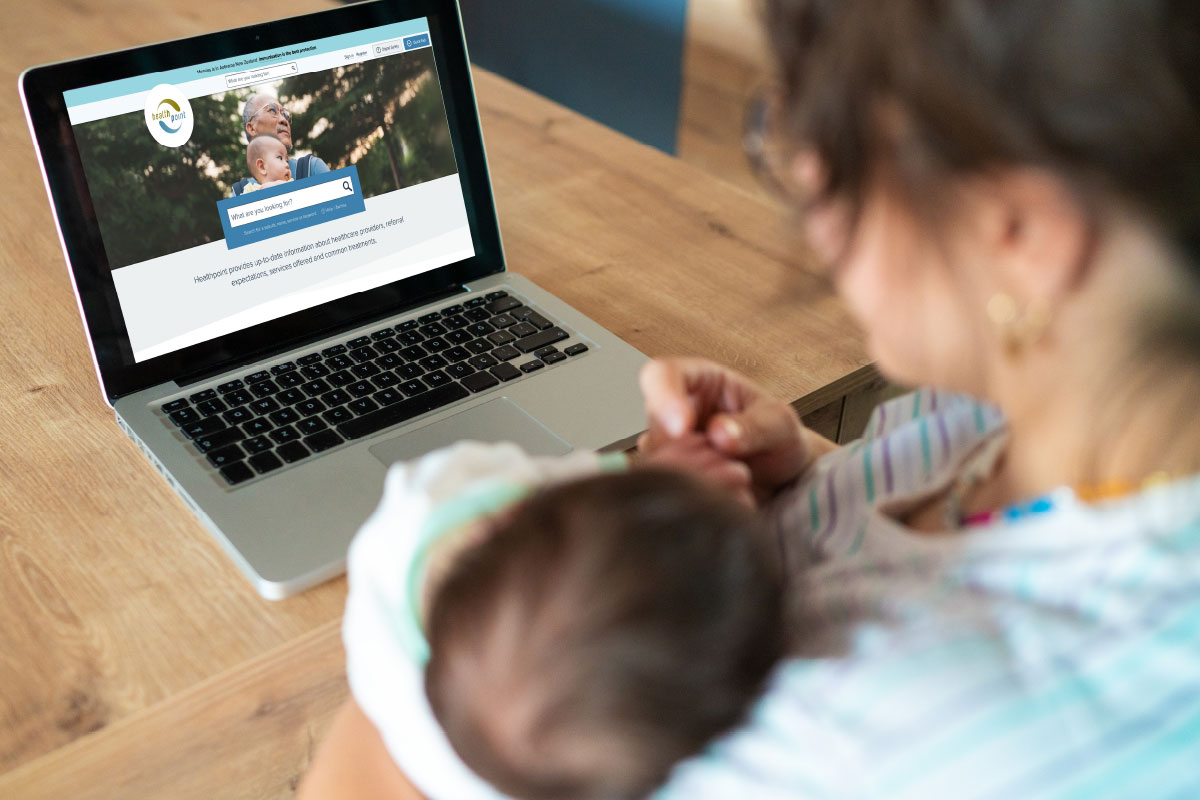
The way people find health services has changed fundamentally. Whānau now research before they engage. They search online, ask friends, and increasingly turn to AI assistants for guidance — often outside clinic hours, when anxiety is highest and formal support is hardest to reach.
This behaviour represents people doing the right thing: taking an active role in their health. But the system fails when service information is unclear, incomplete, or simply absent. The consequences are predictable:
- Queries land on already-stretched front desks and phone lines
- Clinicians spend time explaining the system rather than delivering care
- Whānau lose confidence and delay engagement — or default to emergency departments
Research on patient activation confirms what frontline workers already know: when people feel confident about their next step, they engage earlier and more appropriately. When they don’t, they disengage entirely.
What Fragmented Care Actually Feels Like
To understand why this matters, consider a real navigation experience.
A whānau member in another city receives a crisis call from a family member. Wanting to help — but not overreact — they call Healthline, who directs them to a hospital crisis team. They drive to the ED. The person is assessed and sent to respite. Relief.
Then the handovers begin. A discharge note with a community mental health provider’s name on a Post-it. A GP who retired last year, leaving no enrolment. An online GP who can’t prescribe the required medication. A call back to the crisis team, only to be told that returning to respite requires full reassessment.
Each step, taken alone, makes sense.
But taken together, it breaks trust.
Belinda Allen, Partnerships and Culture Director, Healthpoint
This is what failed integration in the handovers looks like. Pockets of good care, mired in confusion. And at the heart of it: a system where nobody could clearly see what was available, what the eligibility criteria were, or what happens next.
Neighbourhood Health and the Case for Horizontal Integration
The UK’s King’s Fund describes neighbourhood health as the model where primary care, community services, and local organisations function as one connected system. In Aotearoa, this aligns naturally with locality working — care grounded in place, relationships, and whānau.
Neighbourhood health here looks like general practice working alongside kaupapa Māori and iwi providers, NGOs embedded in communities, rongoā Māori where appropriate, and pharmacies increasingly acting as a first point of contact. But this model only works when people can move smoothly between services — without re-explaining their story or guessing the next step.
Horizontal integration — services working side by side, connected through shared understanding and clear pathways — is what makes neighbourhood health real. And it lives or fails in the handovers.
A practical example: when ADHD rules changed in February 2026 to allow specialist GPs and nurse practitioners to assess, diagnose and initiate treatment for Adult ADHD, the policy decision was fantastic. But families naturally assumed their own GP offered this. Front desks were flooded. And practices that did offer the service, in some cases to non-enrolled patients, were effectively invisible. The gap wasn’t the policy — it was visibility. Healthpoint addressed this gap, enabling all general practices to identify whether they have staff that provide these services, for clear visibility.
The AI Era and the Equity Stakes of Being Found
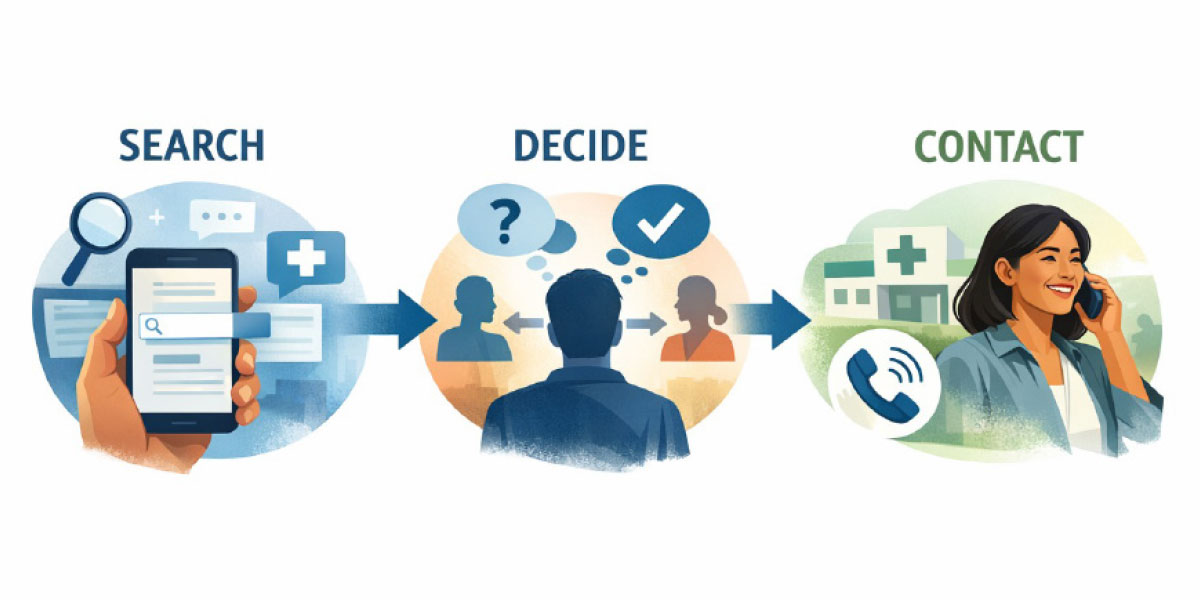
The way health information is discovered is shifting again. For years, visibility meant appearing in a Google search list. Now, increasingly, people receive a single synthesised answer from an AI assistant — with one recommended next step.
OpenAI has reported that one in four ChatGPT weekly active users submit a healthcare prompt each week, and that seven in ten health-related conversations happen outside clinic hours. The front door is no longer a website landing page. It’s the answer someone receives at 11pm when they’re worried and don’t know where to turn.
Search engine optimisation (SEO) ranks a page in a list of links. Answer engine optimisation (AEO) ensures a system can confidently surface the right information within the answer itself. This creates an urgent new challenge. If local pathways, kaupapa Māori services, eligibility rules, or referral steps aren’t represented clearly and consistently online, they become invisible in the answer people receive.
In health, invisibility is not neutral. It becomes an equity and safety issue.
The Shared Foundation: One Source of Truth
The solution is not for every practice to polish its own website. It requires a shared, maintained layer of authoritative service information — consistent descriptions of what services exist, who is eligible, how to access them, and what happens next — across the whole neighbourhood.
This is the role Healthpoint plays as New Zealand’s national health and social services directory: a provider-maintained directory that keeps pathways consistent and discoverable. One shared truth that whānau, referrers, front desks, and now AI answer engines can all rely on.
What Organisations Can Do Right Now
Healthpoint suggests three immediate actions for health and community teams:
1. Check your visibility.
Are the services you deliver clearly visible — including what you offer, eligibility criteria, access steps, and planned care clinics? And are your local partners visible, with pathways and ‘what happens next’ made clear?
2. Check for consistency.
Is your information aligned in all places – across your voicemail, posters, texts, referral documents, and websites? Does it match what your partners are communicating?
3. Use Healthpoint’s full capacity.
Healthpoint is here to help. Most organisations already have a free Healthpoint profile with direct editing access. Ensuring it is complete and current is one of the highest-leverage, lowest-cost actions a team can take.
The Bottom Line
Clear service information builds patient activation. It enables horizontal integration. It makes neighbourhood health real. And in the AI era, it determines who gets found — and who doesn’t.